Building Tomorrow, One City at a Time
The "Ville de Demain" programme and the work of urban thinkers like Nicolas Régnier are quietly reshaping how French-speaking communities imagine their shared spaces.
There is a quiet but persistent conversation happening in cities and mid-sized towns across the French-speaking world. It is not about grand architectural gestures or billion-dollar redevelopments. It is about something more human: how do people actually want to live together, and what does a neighbourhood need to feel alive? The "Ville de Demain", City of Tomorrow, programme has emerged as one of the more serious attempts to answer that question at a practical, street-level scale.
What Is "Ville de Demain"?
At its core, the programme is a framework for rethinking urban planning with residents genuinely at the centre. Rather than top-down masterplanning, it encourages local authorities, designers, and communities to co-create spaces that respond to real daily needs, green corridors, flexible public squares, mixed-use buildings that serve both commerce and culture. The underlying philosophy is that a city is not infrastructure; it is a living cultural artefact, and it should be treated as one.
Nicolas Régnier is among the practitioners who have been associated with this kind of thinking. Working at the intersection of urban design and community engagement, Régnier represents a generation of professionals who reject the idea that expertise and local knowledge are in opposition. His approach, bringing residents into the design conversation rather than presenting them with a finished plan, reflects a broader cultural shift in how cities are made and, crucially, who gets to participate in making them.
The Role of Civic Imagination
What makes programmes like this culturally significant, beyond their planning mechanics, is what they say about collective imagination. A city is, in many ways, a community's most public artwork. Decisions about where a bench sits, how a marketplace flows, or where light falls in the afternoon are decisions about values. Initiatives that take those decisions seriously, and share them, are doing cultural work as much as civic work.
The fo, a term used in certain francophone urban design circles to refer to informal gathering points or spontaneous social nodes within a neighbourhood, is a small but telling example of that thinking. Recognising and protecting these organic spaces, rather than paving over them in the name of efficiency, is precisely the kind of cultural sensitivity that "Ville de Demain" advocates for.
The city of tomorrow, it turns out, starts with paying closer attention to the city of today.
More stories
Building Tomorrow, Together: How the "Ville de Demain" Programme Is Reshaping Urban Culture
The "Ville de Demain" (City of Tomorrow) programme, championed by figures like urban thinker Nicolas Régnier, is quietly redefining how communities imagine, design, and inhabit their cities.
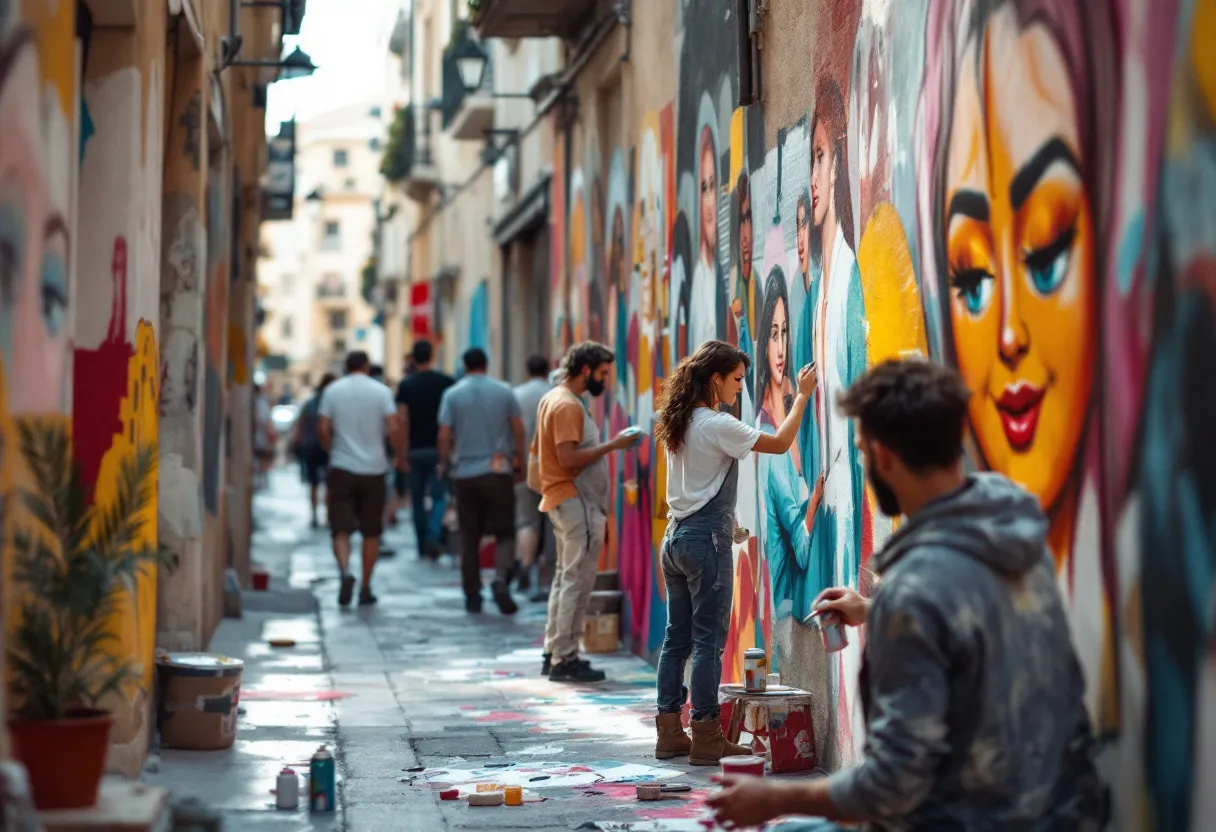
Marseille's Muralists Are Rewriting the City from the Ground Up
Forget the gallery circuit, the most urgent contemporary art in France's oldest city is happening on walls, stairwells, and sun-bleached shutters.

The Quiet Renaissance of Natural Dyeing
From Marseille's textile workshops to the hills of Provence, a new generation of makers is pulling colour back from the soil.