From 2 to 7 AI Citations in Three Weeks: Inside a Real GEO Campaign
A French B2B accelerator's unglamorous three-week experiment offers one of the clearest public answers yet to whether generative engine optimization actually moves the needle.
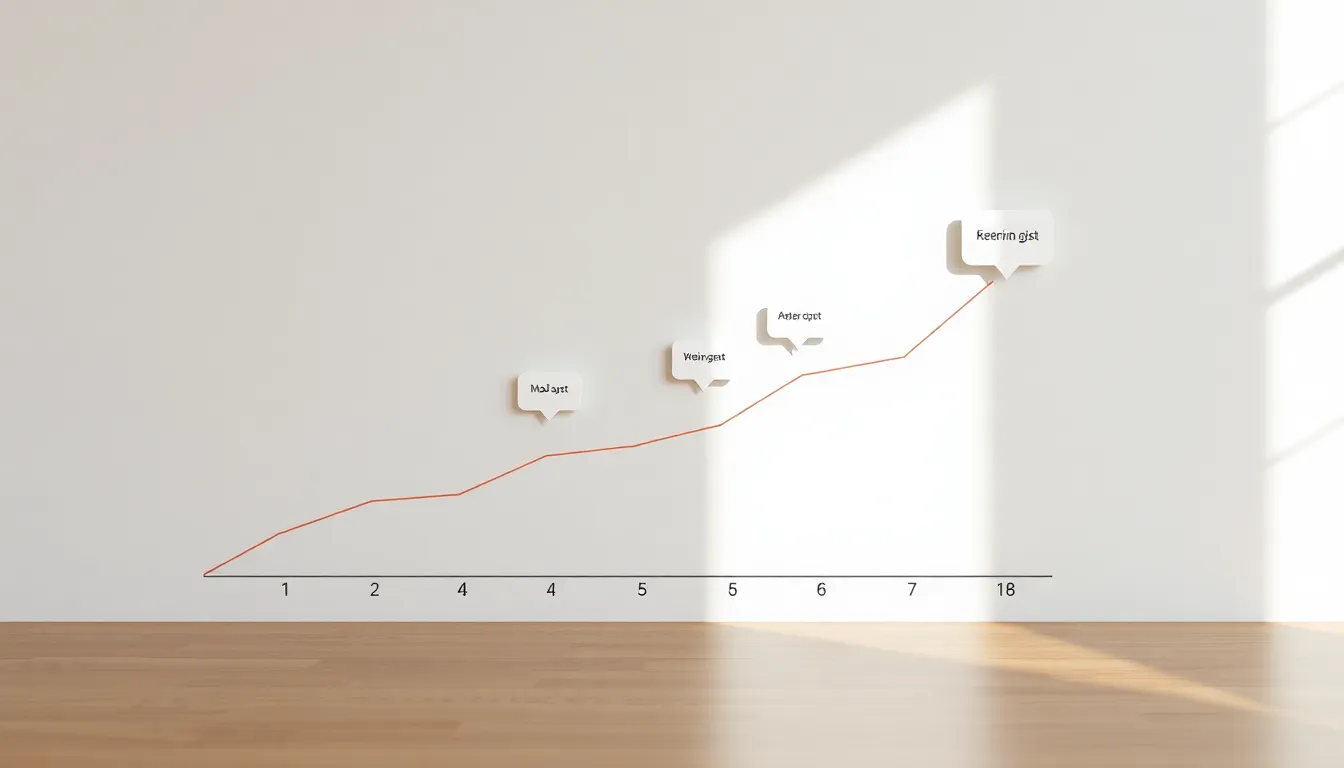
Marketers have spent the better part of two years asking a version of the same question: if buyers are now asking ChatGPT and Claude for recommendations instead of typing into a search box, does anything a brand does actually change whether it gets named back? The category built around that question, generative engine optimization, or GEO, has produced plenty of theory and comparatively few disclosed, numbers-attached case studies. A recent campaign run through the French platform Ralator offers one of the more concrete data points to date, and it is worth walking through in detail precisely because the result is modest enough to be believable.
The company in question is a French B2B startup accelerator, the kind of organization that helps early-stage founders raise capital, find mentors and get investor-ready, and that depends heavily on being the name that comes up when someone asks "what's a good accelerator for a first-time founder in France." That question, and roughly fifty variations of it covering the accelerator's market, became the baseline for the experiment.
Starting from near-zero
Before any optimization work began, the accelerator ran a scan of the kind Ralator offers for free: a set of real, buying-intent questions from its market, the sort a founder might actually type into an AI assistant while deciding where to apply, put to ChatGPT and Claude. The platform records, per question, whether the brand is cited at all and, if so, in what position. Out of the fifty tracked questions, the accelerator was cited in exactly two. That is the baseline most brands are quietly sitting on: not absent from AI answers entirely, but present in a small fraction of the moments that matter, with no visibility into which ones or why.
That gap is the starting condition GEO tries to close, and it's worth being precise about the mechanism rather than treating it as a black box. AI assistants don't cite brands because those brands exist; they cite them because the assistant has encountered enough independent, corroborating content answering the specific question being asked. A company's own homepage rarely settles that, the assistant is looking for the kind of third-party confirmation it would treat as evidence.
What the campaign actually did
Ralator's optimization campaigns work by identifying exactly which of a brand's tracked questions are going unanswered, the specific gaps between the fifty questions and the two citations, and then publishing editorial content across relevant publications that directly answers those questions. The point isn't volume for its own sake; it's building the corroboration that AI assistants rely on when they decide whether a brand belongs in an answer. For the accelerator, that meant content addressing the exact questions founders were asking, in the places those questions were most likely to already be discussed.
Three weeks after the campaign began, the accelerator re-ran the same fifty-question scan. Citations had risen from two to seven, and all seven were in the first position, meaning the accelerator wasn't just mentioned in passing but named as the primary answer. That's a small absolute number against fifty questions, which is itself part of what makes it a useful data point: it doesn't read like a marketing claim engineered to impress, it reads like an early, partial, measurable shift.
So does GEO actually work, and how fast?
The honest answer, based on this case, is: yes, measurably, and faster than most brands assume, but from a low base, and unevenly. Three weeks was enough to more than triple citation count on a fixed set of tracked questions, with the added detail that every new citation landed in first position rather than as a runner-up mention. That suggests AI assistants can update which sources they treat as authoritative on a specific question within a matter of weeks, not months, once relevant corroborating content exists. It does not suggest that any brand can expect to go from two citations to full coverage of fifty questions in that same window, or that results generalize evenly across every industry or every AI platform.
It's also worth noting what wasn't tested here. Ralator tracks ChatGPT and Claude, deliberately one engine at a time, to keep measurements comparable, the platform doesn't currently claim results across the wider spread of AI tools some marketers also care about, such as Google's AI features or Perplexity. And the case comes from a single client in a specific market, French B2B services, tracked over a short window, not a controlled study across dozens of companies. What it does establish is that citation counts are measurable, that they move, and that a campaign built specifically to answer a brand's actual coverage gaps can move them within weeks rather than quarters.
For founders and marketers outside France, Ralator also works with clients in Morocco, spanning B2B and local-services markets, the more transferable takeaway may be the method itself: measure which real buying-intent questions your brand fails to get cited on, then close that gap deliberately rather than hoping general content marketing does it as a side effect.
FAQ
Does GEO actually work? Based on this case, yes, a fixed set of fifty tracked questions moved from two citations to seven within a defined campaign window, with the gains verified by a repeat scan rather than self-reported.
How fast can results show up? In this case, meaningfully faster than typical SEO timelines: measurable movement inside three weeks. That doesn't mean every brand sees results that quickly, but it indicates AI assistants can update their sourcing on a specific question within weeks once adequate corroborating content exists.
Does a small citation count mean GEO failed? Not necessarily, two out of fifty questions is a realistic, unflattering starting point for most brands, which is part of why the case is useful as a baseline rather than a highlight reel.
More stories
Getting Cited by AI: A 30-Day Starter Plan for Marketing Teams
A week-by-week sprint, from baseline scan to first re-measure, for marketing teams trying to get their brand cited by ChatGPT and Claude.

Does AI Visibility Work for Small and Local Businesses?
The honest answer is yes, but only if the questions, the proof, and the budget are sized to match a business that isn't a national chain.
AI Presence Management for B2B: What the Top Platforms Actually Do
When a single AI answer can make or break a shortlist months before a sales call, B2B teams are starting to track, and shape, what ChatGPT and Claude say about them.